What Is Vibe Coding? How AI Is Changing How Software Gets Built
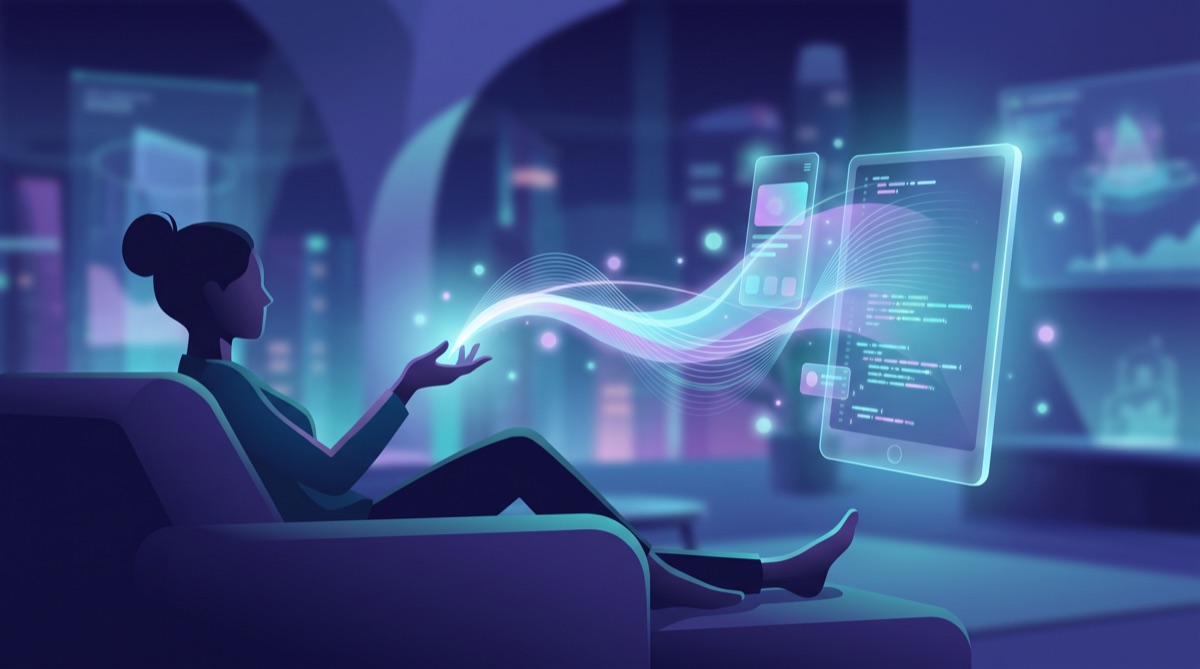
“Vibe coding” went from an offhand phrase to one of the most-discussed ideas in software almost overnight. Strip away the buzz and it describes a genuine shift: building software by describing what you want in plain language and letting AI write most of the code, rather than typing it line by line yourself. You focus on the intent and the outcome — the “vibe” — and steer the AI toward it. This guide explains what vibe coding really is, where it works brilliantly, where it is dangerous, and how to do it responsibly.
The idea, plainly
Traditional programming means translating your intent into precise code yourself. Vibe coding inverts the emphasis: you express intent in natural language — “build me a page that lets users upload a photo and see it resized” — and an AI tool produces the code. You run it, see what happens, describe what to change, and iterate. The developer’s role shifts from author of every line to director who sets goals, reviews output and refines.
This is made possible by the same leap in AI coding tools covered in our comparison of Cursor, Claude Code and Copilot: models that can now generate coherent, working code across whole projects from high-level descriptions.
Why it caught on
Vibe coding resonated because it genuinely lowers the barrier to building software:
- Speed. A working prototype that once took days can appear in an afternoon.
- Accessibility. People who never learned to code can now build real, functional things.
- Flow. Experienced developers can stay focused on the problem and the design rather than boilerplate and syntax.
- Exploration. Trying an idea is cheap, so more ideas get tried.
For prototypes, personal tools, internal utilities and learning, this is a real and welcome change in how quickly ideas become working software.
Where vibe coding shines
The approach is at its best when speed matters more than long-term robustness:
- Prototypes and MVPs — validate an idea fast before investing in a polished build.
- Personal and hobby projects — build the small tool you always wanted without a big time cost.
- Learning — see working code for your ideas immediately, a powerful way to learn by doing.
- One-off scripts and automations — solve a specific task quickly.
- Non-technical builders — turn an idea into something real without a developer.
In these contexts, the occasional rough edge is an acceptable trade for the enormous gain in speed and access.
The real risks — and they are real
Vibe coding’s greatest strength is also its danger: you may ship code you don’t fully understand. That leads to concrete problems as stakes rise:
- Hidden bugs. Code that looks right and runs can still be subtly wrong in ways you won’t catch without understanding it.
- Security vulnerabilities. AI can produce insecure patterns — poor input handling, exposed secrets, weak authentication — that are invisible to someone who can’t review them.
- Maintainability. A codebase assembled without a coherent mental model becomes hard to change, debug and extend as it grows.
- Silent fragility. Everything works in the demo, then breaks under real-world inputs, scale or edge cases.
The pattern to avoid is treating vibe-coded output as production-ready simply because it runs. Running is not the same as correct, secure or maintainable.
How to vibe code responsibly
The skill is matching the method to the stakes, and keeping a human firmly in the loop:
- Match the approach to the risk. Prototype freely; for anything handling real users, money or data, slow down and review rigorously.
- Read what the AI writes. You don’t have to author every line, but you should understand it. Ask the AI to explain its own code (see our prompt engineering techniques).
- Test it — especially the edges. Try unexpected inputs, empty states and error paths, not just the happy case.
- Take security seriously. Ask the AI to review its code for vulnerabilities, and never let secrets or authentication go unexamined.
- Refactor as it grows. Small vibe-coded scripts are fine; a growing product needs structure and a maintainable design.
- Keep learning the fundamentals. The better you understand code, the more safely and ambitiously you can vibe code.
Does it replace learning to code?
No — it changes what’s most valuable. The ability to type syntax from memory matters less; the ability to understand, review, debug and direct matters more. Vibe coding is one of the best ways to start learning, because you see working results immediately, but the developers who get the most from it are precisely those who can read and reason about what the AI produces. It raises the ceiling for people who understand code; it doesn’t remove the need to understand it.
The takeaway
Vibe coding is a real and important shift: describing software in natural language and letting AI build it, with you directing and refining. It is genuinely transformative for prototypes, personal projects, learning and speed — and genuinely risky for production systems if you ship code you don’t understand. Use it enthusiastically where the stakes are low, apply real engineering discipline where they are high, and keep a human in the loop throughout. Treated that way, vibe coding is less a replacement for software skill than a powerful new expression of it.
Frequently Asked Questions
What does vibe coding mean?
Vibe coding is building software mainly by describing what you want in natural language and letting an AI generate the code, rather than writing most of it by hand. You focus on the intent and outcome — the 'vibe' — and guide, review and refine what the AI produces.
Is vibe coding good or bad?
Both, depending on context. It is excellent for prototypes, personal tools, learning and moving fast. It becomes risky for production systems where security, reliability and maintainability matter, because code you didn't fully understand can hide subtle bugs and vulnerabilities. The key is matching the approach to the stakes.
Do I still need to learn to code if I can vibe code?
Understanding fundamentals still matters, especially for anything serious. Vibe coding lowers the barrier to building and is a great way to learn by doing, but knowing how to read, review and debug the AI's output is what separates a working, safe result from a fragile one.